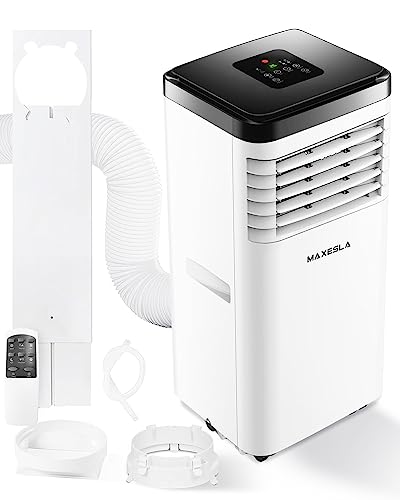
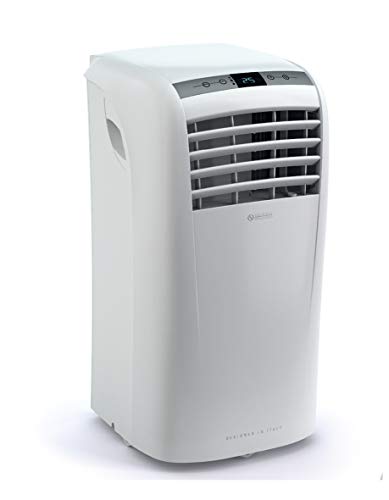
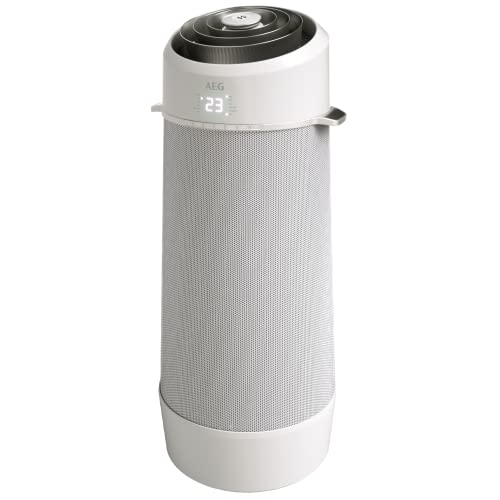
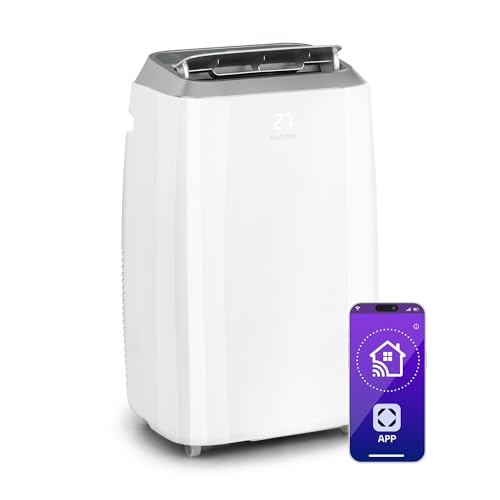
Which brands make the best 9000 BTU portable air conditioners?
The best 9000 BTU portable air conditioner brands are ranked below:
- [shortcode-13688814350650313402054564879284940401443630958400] (Average overall score: [shortcode-03802248999998817802006530414289866578103044613005])
- [shortcode-00897905979712777589115829045835906948540760189832] (Average overall score: [shortcode-14159014359482396637106601308214375326822271644264])
- [shortcode-12557241751641206027138757848910492664851219158941] (Average overall score: [shortcode-00932207244811029119100255909816884621224024521779])
The chart below ranks 9000 BTU portable air conditioner brands by average overall score.
[horizontal-chart-07326353630613003331029818573613455472690530248440]
What room size can a 9000 BTU portable air conditioner cool?
A 9000 BTU portable air conditioner commonly covers about 12–44 m² on the manufacturer’s room-size scale, but the practical result depends on heat entering the room. A shaded, closed bedroom may sit near the upper part of a claim, while a sunny room with high ceilings or poor insulation belongs nearer the lower end.
Use the published room figure together with the SACC rating, window orientation, ceiling height, and whether doors open onto a warmer area. A unit that is too small may run continuously, whereas oversizing can cause short cycling and weaker humidity control.
The hose and window seal are part of the cooling system. Keep the exhaust short and straight, close gaps around the panel, and choose the lower end of the claimed area when the room has substantial afternoon sun or internal heat.
The chart below shows the maximum-room-size distribution of 9000 BTU portable air conditioners.
[vertical-chart-03670744349648873761105856726942026178502582367393]
How do ASHRAE and DOE/SACC ratings affect a 9000 BTU model?
ASHRAE BTU/h is the nominal cooling-capacity figure used in many product names, while DOE/SACC is a seasonal rating intended to better reflect the cooling delivered by a portable unit. SACC is usually lower because it accounts for duct heat, cycling, and other losses that a simple laboratory capacity does not show.
Compare two models using the same rating system. A product labelled 9,000 BTU under ASHRAE is not necessarily equivalent to 9,000 BTU of delivered SACC cooling, so the higher comparable SACC figure is usually the more useful performance signal. Also check the hose arrangement, window seal, and input power because a strong paper rating can be undermined by a leaky installation or a room whose heat load is beyond the unit’s practical capacity.
When does a room need more than 9000 BTU of cooling?
A room usually needs more than 9000 BTU of portable cooling when it is above roughly 30–35 m², open to adjacent spaces, heavily sunlit, or poorly insulated. High ceilings, several occupants, computers, and cooking equipment can also push the heat load beyond what a nominal 9,000-BTU unit can remove.
Move to a larger model only when its delivered SACC output, room-size guidance, and installation fit the space. A nominal 10,000 or 12,000 BTU label is not enough if the window seal is poor or the hose adds substantial heat to the room. For a borderline room, close doors and shade the hottest windows before buying more capacity; if the area is far beyond the portable unit’s rating or needs continuous whole-home cooling, a fixed system is usually more dependable.
How much electricity does a 9000 BTU portable air conditioner use?
A 9000 BTU portable air conditioner commonly draws about 800–1,050 W while the compressor is actively cooling, although the nameplate value varies by model. At a steady 900 W load, one hour uses about 0.9 kWh; real consumption is lower when the thermostat cycles off and higher when the room is hot or poorly sealed.
Estimate running cost from rated input power, your electricity tariff, and the expected duty cycle rather than from the BTU label. A unit that draws less but runs continuously can cost more than a better-matched model that cycles down.
Use an energy meter at the wall socket if the cost matters. It captures compressor cycling, fan-only periods, and the effect of a long hose or open door more accurately than a simple maximum-load calculation.
How noisy are 9000 BTU portable air conditioners?
9000 BTU portable air conditioners are commonly rated around 62–65 dB at their louder settings, while quieter examples publish figures near 52–56 dB. A lower number helps in a bedroom or office, but published tests may use different fan speeds, compressor states, and measurement distances.
Listen for more than the headline rating: compressor hum, fan pitch, cabinet vibration, and a hose touching a wall can make two units with the same dB figure sound very different. A level floor, clearance around the intake, and a short straight exhaust reduce avoidable rattles. Night mode and correct sizing also matter because a unit that reaches the set temperature without running at maximum output all night will normally sound calmer than an undersized cabinet fighting a sunny or leaky room.
The chart below shows the maximum-noise distribution of 9000 BTU portable air conditioners.
[vertical-chart-00259751509917925010051180146645392698113816778905]
Should you choose a 9000 or 10000 BTU portable air conditioner?
Choose a 9000 BTU portable air conditioner when the room is moderate in size, reasonably insulated, and a smaller cabinet or lower purchase price matters. A 10000 BTU model gives more margin for a sunny room, higher heat load, or area near the upper end of the 9000-BTU room claim, but it may be heavier, louder, and more expensive.
Do not compare the labels alone. Check delivered SACC output, rated input power, maximum noise, room-size guidance, and the window kit. A well-sealed 9000 BTU unit can cool more reliably than a nominally larger model losing heat through a poor installation.

Near the boundary, choose the larger capacity only when the extra output is supported by a credible rating and the room can tolerate the added cabinet size and sound. Avoid oversizing a small bedroom because short cycling can weaken humidity control.
How much do 9000 BTU portable air conditioners cost?
The best 9000 BTU portable air conditioners usually cost about £300-£600, although capable entry models start around £130-£260. Basic units in the lower tier often include a 24-hour timer, dehumidification, and two or three speeds, but their noise control and cabinet refinement can be limited.
Mid-range choices around £300-£400 are more likely to combine dependable 9,000-BTU cooling with better controls, lower published noise, stronger drainage, or a more substantial window kit. Premium models from about £400-£600 can add quieter operation, app control, refined airflow, or a stronger brand and service network; prices above that level should bring a clear benefit rather than only a larger feature list.
The chart below shows the price distribution of 9000 BTU portable air conditioners.
[vertical-chart-05356911321367463759033853369168825358302268502975]