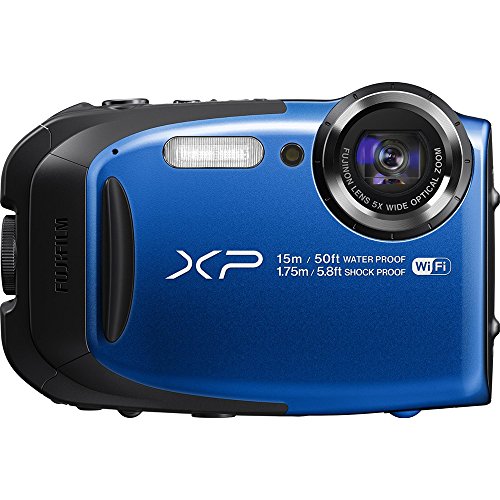
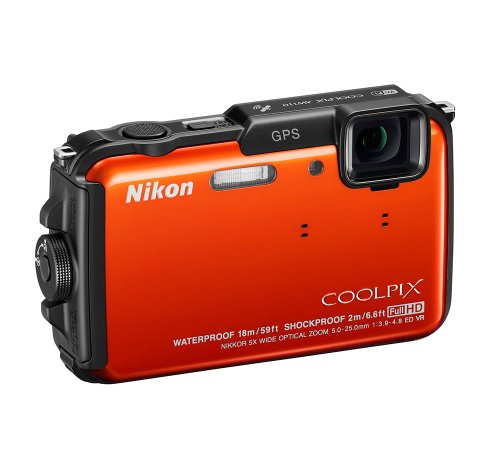
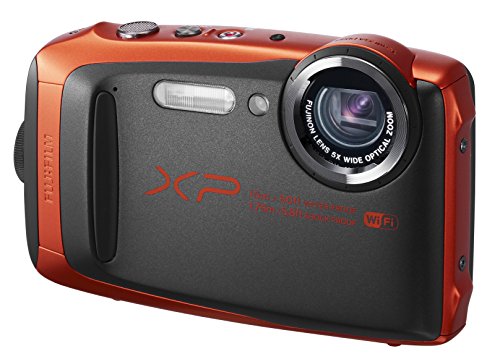
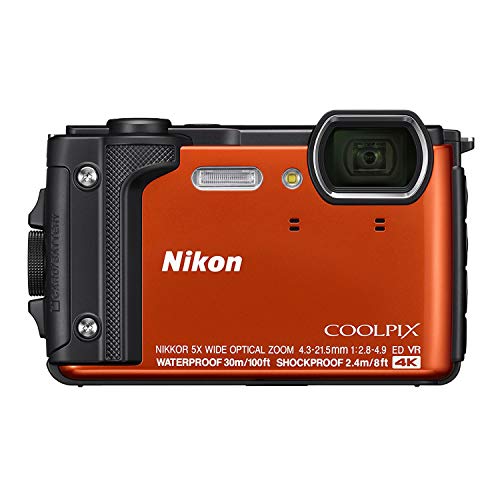
¿Qué marcas fabrican las mejores cámaras subacuáticas?
Las mejores marcas de cámaras subacuáticas se clasifican a continuación:
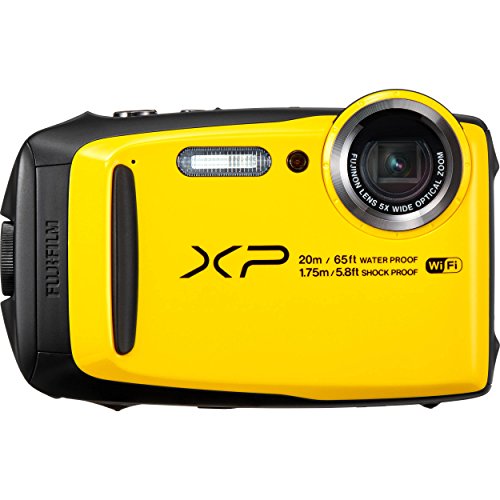
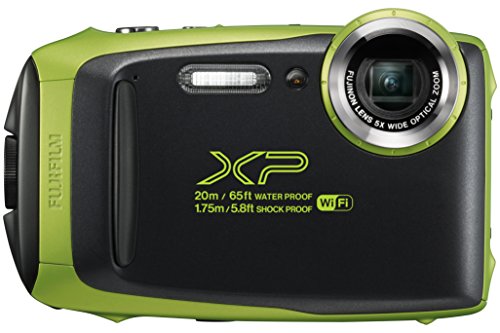
- Fujifilm (Puntuación general media: 5.2)
- Olympus (Puntuación general media: 5)
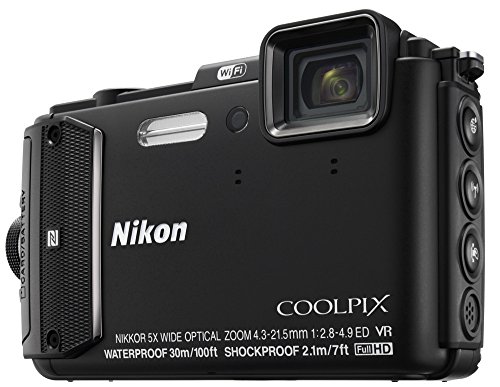
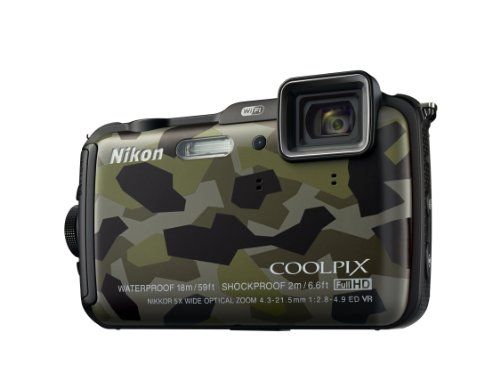
- Nikon (Puntuación general media: 4.9)
El siguiente gráfico compara las marcas de cámaras subacuáticas según su puntuación general media.
[horizontal-chart-00644923519556818538092706761651319648772731732064]
¿Qué hace que una cámara sea adecuada para usarla bajo el agua?
Una cámara es adecuada para uso subacuático cuando su profundidad máxima, sellado, controles, objetivo y funciones de imagen se ajustan a la actividad acuática prevista. Un cuerpo certificado para 10 m puede servir en piscinas y para hacer esnórquel a poca profundidad, mientras que los descensos habituales a unos 20–30 m requieren una cámara o carcasa expresamente homologada para superar la profundidad máxima prevista con un margen de seguridad razonable.
El manejo bajo el agua es tan importante como el sellado. Los botones grandes y separados, una correa de muñeca segura, una pantalla luminosa, un objetivo que empiece en un campo de visión equivalente a unos 24–28 mm y un enfoque automático fiable facilitan el encuadre cuando hay poca visibilidad o los guantes reducen la destreza; las funciones que dependen exclusivamente de la pantalla táctil resultan poco útiles una vez sumergida la cámara.
Los controles de imagen y vídeo deben compensar la forma en que el agua absorbe la luz roja y naranja. El balance de blancos personalizado, los modos de escena subacuática, los archivos RAW, la compatibilidad con flash o iluminación externa y la estabilización mejoran los resultados, pero los filtros de color y el flash integrado tienen un alcance útil limitado y no sustituyen una iluminación adecuada en aguas más profundas o turbias.
¿Hasta qué profundidad son resistentes al agua las cámaras subacuáticas sin carcasa?
Las cámaras subacuáticas sin carcasa suelen ser resistentes al agua hasta unos 10–20 m, y las mejores compactas reforzadas alcanzan aproximadamente 30–31 m. Las certificaciones de unos 3–5 m son adecuadas para salpicaduras, piscinas y usos a muy poca profundidad, mientras que 10–15 m cubren la mayoría de las actividades recreativas de esnórquel; el límite indicado representa una condición máxima de ensayo, no una profundidad que se deba superar.
La profundidad máxima solo es válida cuando todas las tapas, cierres, juntas y cubiertas de conectores están completamente cerradas según las instrucciones. La presión aumenta aproximadamente una atmósfera por cada 10 m de agua de mar, y los impactos dinámicos de saltos, olas o chorros pueden someter las juntas a esfuerzos distintos de los de una prueba estática controlada, por lo que deben respetarse tanto el límite de profundidad como las indicaciones sobre la actividad.
El siguiente gráfico compara las profundidades máximas de resistencia al agua de las cámaras subacuáticas.
[vertical-chart-12498974981125745756038290215252832785322016767621]
¿Necesitan las cámaras subacuáticas una carcasa independiente?
Las cámaras subacuáticas necesitan una carcasa independiente para bucear a profundidades que superen su certificación original, pero una cámara reforzada con la clasificación adecuada se puede usar sin carcasa en piscinas, al practicar kayak y para hacer esnórquel a poca profundidad. Una cámara certificada para 15 m no debe llevarse a una inmersión de 25 m solo porque el tiempo previsto a esa profundidad sea breve.
Las carcasas específicas suelen ampliar el uso de sistemas compactos, cámaras de acción, cámaras sin espejo o DSLR hasta unos 40–60 m, mientras que las carcasas especializadas pueden llegar más hondo. La carcasa debe corresponder al modelo exacto de cámara, ya que la posición de los botones, el espacio para el objetivo, la geometría del puerto y la gestión térmica varían incluso entre cuerpos estrechamente relacionados.
Una carcasa también permite disponer de controles más grandes, bandejas, asas, flashes externos, luces de vídeo, comprobaciones de fugas por vacío y puertos intercambiables planos o de cúpula. Los puertos de cúpula conservan un campo de visión más amplio con objetivos gran angular, mientras que los planos amplían la escena bajo el agua y suelen ser más apropiados para objetivos macro o más estrechos.
Antes de una inmersión, el sistema completo debe montarse y probarse exactamente como indique el fabricante. La carcasa, el puerto, los anillos de extensión, los cables y los accesorios deben mantenerse dentro de sus límites individuales, porque el componente certificado para la menor profundidad determina la profundidad máxima segura de todo el equipo.
¿Qué calidad de imagen ofrecen las cámaras subacuáticas?
La calidad de imagen de las cámaras subacuáticas es buena para viajes, esnórquel, primeros planos y documentación, pero la mayoría de las compactas reforzadas que se usan sin carcasa no pueden igualar a una cámara con sensor de mayor tamaño dentro de una carcasa de calidad. Sus sensores pequeños y zooms compactos ofrecen una profundidad de campo útil y buena portabilidad, pero el ruido, las altas luces recortadas y la pérdida de detalle fino se hacen más visibles cuando disminuye la luz.
El agua reduce el contraste y absorbe rápidamente los colores cálidos, por lo que un agua clara y poco profunda, con el sol a la espalda del fotógrafo, produce los resultados más limpios con luz natural. La captura RAW y el balance de blancos manual o personalizado ofrecen más margen de recuperación, mientras que un flash externo o una luz continua recuperan el color a cierta profundidad; el flash integrado tiene poco alcance y puede iluminar las partículas suspendidas justo delante del objetivo.
La elección del objetivo y la distancia de trabajo son fundamentales. Un objetivo gran angular luminoso permite al fotógrafo mantenerse cerca y reducir la cantidad de agua entre la cámara y el sujeto, mientras que un verdadero modo macro ayuda a fotografiar pequeños organismos marinos; un zoom digital excesivo solo amplía el ruido y la neblina en lugar de recuperar detalles lejanos.
¿Qué calidad de vídeo ofrecen las cámaras subacuáticas?
La calidad de vídeo de las cámaras subacuáticas puede ser muy buena en aguas claras y bien iluminadas, especialmente con grabación 4K y una estabilización eficaz, pero la poca luz, la pérdida de color y las partículas flotantes revelan rápidamente las limitaciones de los sensores pequeños. La resolución por sí sola no basta: hay que comprobar la velocidad de fotogramas, el recorte, la tasa de bits, el comportamiento del enfoque automático, el límite de grabación y si la estabilización sigue disponible en el modo elegido.
Para grabaciones habituales de natación y arrecifes, 4K a 25 o 30 fps conserva un buen nivel de detalle, mientras que 50 o 60 fps permite obtener movimientos más fluidos y cámara lenta a media velocidad cuando la cámara lo ofrece sin un recorte acusado. Los modos con una velocidad de fotogramas alta necesitan más luz y pueden reducir la resolución o la calidad de imagen, por lo que resultan menos útiles en inmersiones profundas o con cielo cubierto.
La estabilización reduce el movimiento de las manos, pero no puede eliminar los desplazamientos y cabeceos más amplios causados por las corrientes. Una bandeja corta o una carcasa con dos asas mejora el control, y un campo de visión amplio hace que el movimiento parezca más estable al tiempo que permite mantener la cámara cerca del sujeto.
El audio subacuático suele sonar amortiguado y está dominado por el ruido de manipulación, las burbujas y los sonidos de la carcasa. El micrófono integrado debe tratarse como una pista de referencia; también conviene confirmar si un micrófono externo es realmente compatible con el conjunto sellado y preparar una voz en off o un sonido independiente grabado en superficie cuando sea importante contar con una narración clara.
¿Qué facilidad de control ofrecen las cámaras subacuáticas en el agua?
Las cámaras subacuáticas son razonablemente fáciles de controlar cuando tienen botones físicos grandes, cambios de modo sencillos y una pantalla luminosa, pero los controles pequeños y los menús que dependen de la pantalla táctil se vuelven difíciles de usar con guantes, olas o poca visibilidad. Un botón de vídeo específico, un disparador elevado, una respuesta clara de los botones y unos controles que se puedan identificar al tacto reducen las tomas perdidas; conviene configurar el balance de blancos, la resolución, el enfoque automático y los accesos directos antes de entrar en el agua.
La flotabilidad y el agarre también influyen en el control. Una correa de muñeca segura resulta adecuada para nadar a poca profundidad, mientras que una bandeja con asas aporta estabilidad a un sistema con carcasa y proporciona puntos de montaje para luces; una flotabilidad ligeramente negativa evita que el equipo se aleje flotando, pero un conjunto demasiado pesado provoca fatiga y dificulta el encuadre preciso.
¿Cuánto cuestan las cámaras subacuáticas?
Las cámaras subacuáticas nuevas suelen costar unos 150–800 € sin una carcasa independiente, mientras que un sistema subacuático completo de objetivos intercambiables puede superar los 2.000–5.000 €. Las compactas acuáticas básicas de unos 150–300 € están diseñadas para piscinas, playas, viajes familiares y esnórquel a poca profundidad; los modelos reforzados más resistentes de unos 350–550 € suelen añadir vídeo 4K, objetivos más luminosos, certificaciones para mayor profundidad, captura RAW o mejores funciones de enfoque a corta distancia.
Las compactas industriales especializadas y los modelos reforzados de gama alta pueden alcanzar aproximadamente 600–1.000 €. Las cámaras de acción pueden partir de precios inferiores, pero las carcasas protectoras, luces, bandejas, filtros, baterías y soportes elevan el precio de un equipo subacuático realmente útil, y su campo de visión ultra gran angular fijo es diferente del objetivo zoom de una compacta reforzada.
Para obtener la calidad de una cámara sin espejo o DSLR, hay que presupuestar por separado una carcasa específica para el modelo, el puerto, el engranaje del objetivo, la bandeja, los brazos y la iluminación. Una carcasa por sí sola puede costar unos 300–2.000 €, según su profundidad nominal y construcción, mientras que cada flash o luz de vídeo puede añadir varios cientos de euros; calcule el precio de la configuración completa necesaria para la profundidad y el objetivo previstos en vez de comparar únicamente los cuerpos de las cámaras.
El siguiente gráfico muestra la distribución de precios de las cámaras subacuáticas.
[vertical-chart-11483292183903965960096562740668879560951749263310]